


Exit Strategy Plans
We aim to be a trusted advisors to our clients for the long term. Even if a company is years away from contemplating a transaction, we believe that it is never too early to start thinking through an exit strategy. Through our Exit Strategy Planning Process we work with company shareholders to help address questions such as the following:
We look forward to discussing our Exit Strategy Planning product and how it might suite your needs.
Selected Transactions
Selected owner exits





Perspective
Related News
 Article · Mar 2025An Estate Planning Opportunity for Owners of Companies Impacted by Recent EventsThe recent efforts by the Department of Government Efficiency (DOGE), new tariffs going into effect, and the looming March 14th deadline to avoid a U.S. government shutdown have significantly impacted companies operating in certain segments [...]Read More →
 Press Release · Oct 2025Webinar – Building Elite Companies and Maximizing Defense & Intelligence Sector ExitsJoin The McLean Group for an insightful one-hour webinar exploring how founders and executives in the Defense, Government & Intelligence (DGI) sector have built elite companies positioned for exceptional exit outcomes. This session marks the [...]Read More →
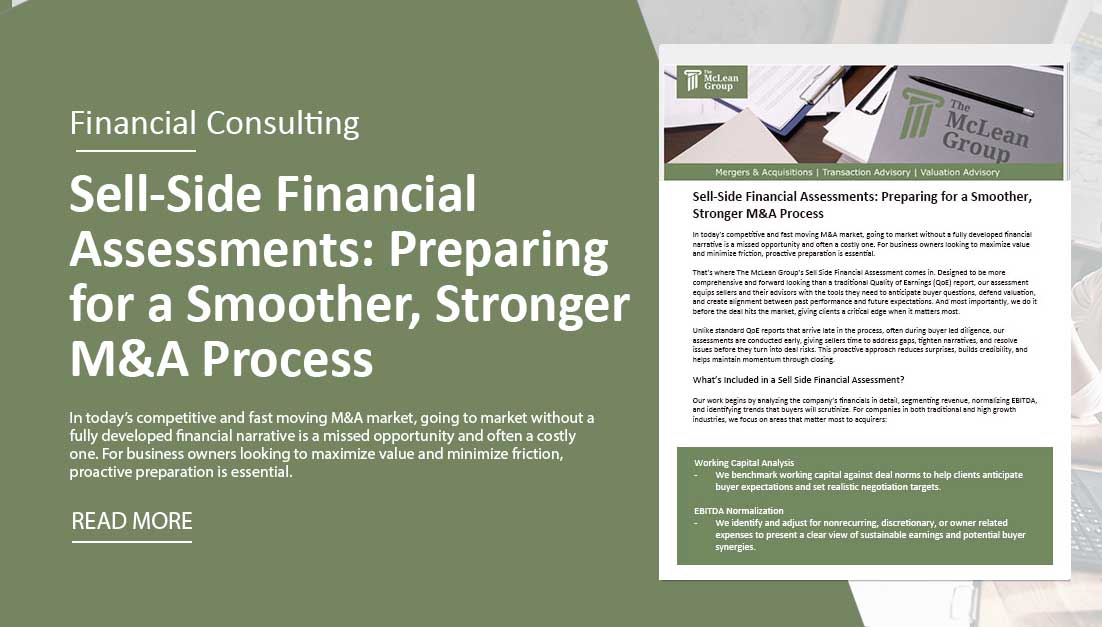 Article · Aug 2025Sell-Side Financial Assessments: Preparing for a Smoother, Stronger M&A ProcessIn today’s competitive and fast moving M&A market, going to market without a fully developed financial narrative is a missed opportunity and often a costly one. For business owners looking to maximize value and minimize [...]Read More →
Talk to us about exit strategy planning
Tell us what you are working on and we will put the right people on the call.