


Sell-side Financial Due Diligence
The McLean Group offers sell-side financial due diligence to prepare and validate financial information about a target company’s business ahead of a potential sale or transaction. Our process involves a detailed review of financial statements, revenue streams, expenses, and liabilities to ensure accuracy and identify potential risks or issues that could impact the deal. The goal is to present a clear, reliable financial picture to prospective buyers, streamlining negotiations and increasing buyer confidence. Critical components of our sell-side due diligence services include the following:
Perspective
Related News
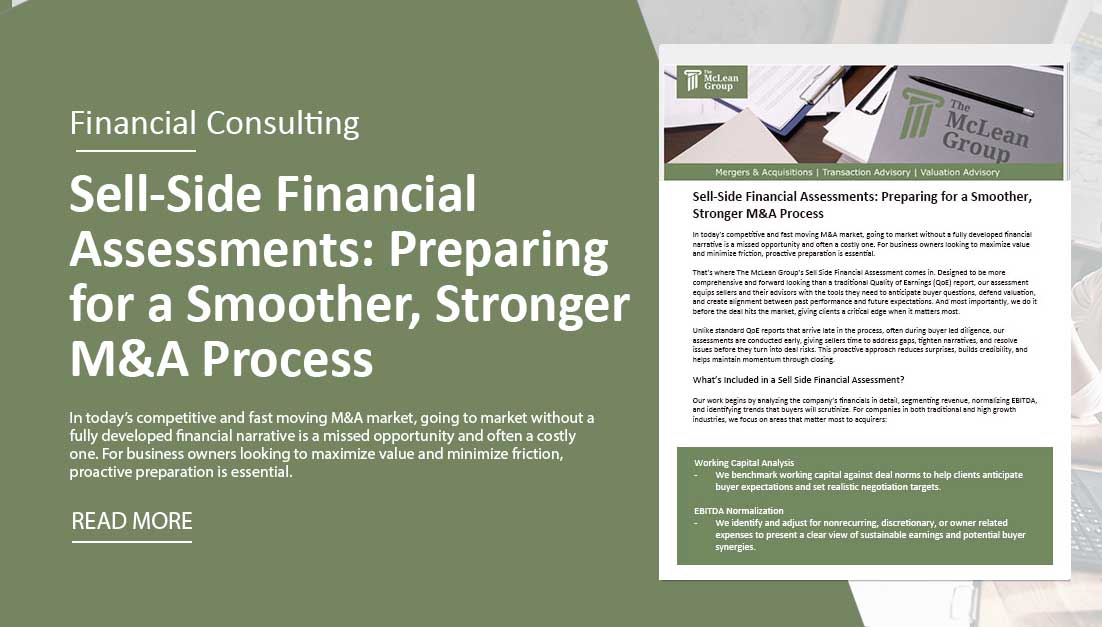 Article · Aug 2025Sell-Side Financial Assessments: Preparing for a Smoother, Stronger M&A ProcessIn today’s competitive and fast moving M&A market, going to market without a fully developed financial narrative is a missed opportunity and often a costly one. For business owners looking to maximize value and minimize [...]Read More →
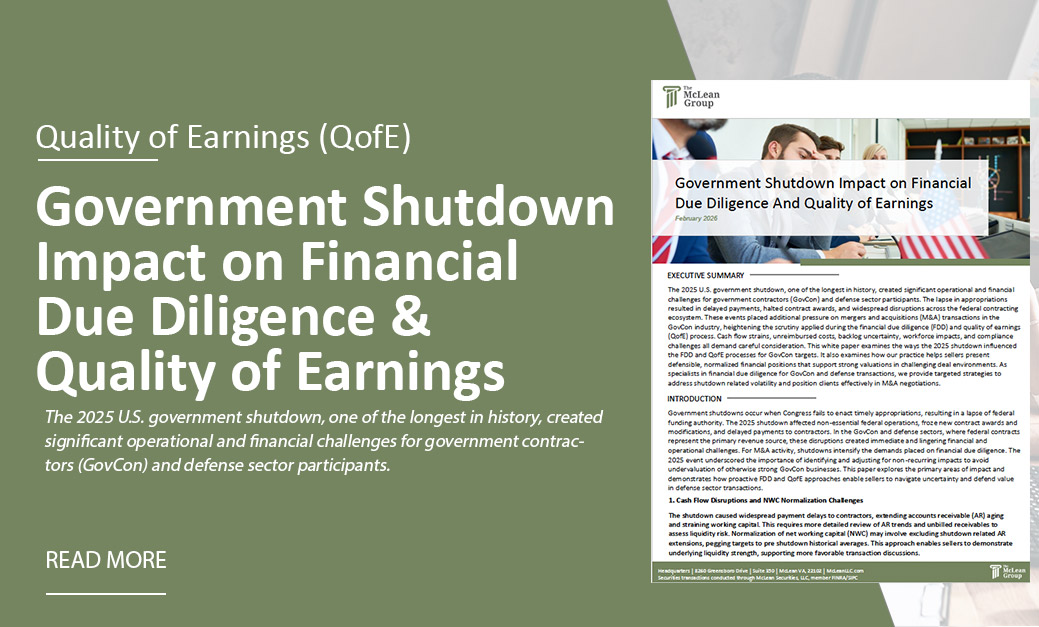 Article · Feb 2026Government Shutdown Impact on Financial Due Diligence And Quality of EarningsThis white paper examines the ways the 2025 shutdown influenced the FDD and QofE processes for GovCon targets. It also examines how our practice helps sellers present defensible, normalized financial positions that support strong valuations [...]Read More →
 Article · Apr 2026EBITDA Only Tells Part of the Story. Does Your QofE Provider Reveal the Rest?Normalized EBITDA shows clean profitability, but it doesn't tell you whether that profitability is built to last. For PE sponsors, the difference between a well-priced deal and a costly mistake often comes down to whether [...]Read More →
Talk to us about sell-side financial due diligence
Tell us what you are working on and we will put the right people on the call.